A beautiful Tilt-shift video of Dublin created as a Student project by Olivia Ricci, Stephen Duffy, Rafal Baran & Afshin Moosavi.
Music: Hoppipolla by Sigur Ros.
For more check tiltshiftdublin.com.
(h/t thejournal.ie)
A beautiful Tilt-shift video of Dublin created as a Student project by Olivia Ricci, Stephen Duffy, Rafal Baran & Afshin Moosavi.
Music: Hoppipolla by Sigur Ros.
For more check tiltshiftdublin.com.
(h/t thejournal.ie)
Matthieu Chardon creates a beautiful montage of Dublin and it’s historic buildings.
(via broadsheet)
Ireland’s disastrous bank bailout has seen the Government pump more than €64.1 billion into the majority of Irish banks. The effect of this saw the country apply to he EU and IMF for a bailout to keep the sovereign afloat. Newly elected TD Stephen Donnelly reveals the context of this bailout in comparison with other EU countries.
The graphic underlines the impact that the banking crisis has had on the average Irish taxpayer.
(via Stephen Donnelly)
Sports website TheScore have visualized the 12 million Euro 2012 tweets to produce the infographic below. The data was taken from social analytics company Sysomos and highlights a new tweets-per-second record for sports in the the final match between Spain and Italy.
Some stats from the infographic:
(h/t mashable.com)
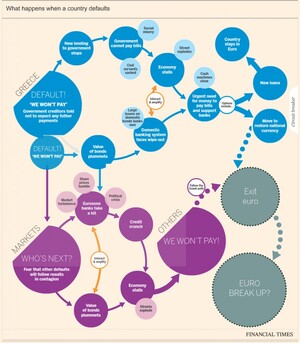
The idea of a Greek exit from the eurozone looks more and more likely each day, with the consequences now said to be ‘managable’. There has been a number of flowcharts and interactive graphics highlighting likely consequences resulting from such a scenario. Some of the most recent are outlined below. Click on the graphics for the full interactive versions.
Financial Times
This interactive graphic from the Financial Times (FT) outlines the likely consequences of a Greece eurozone exit.
Lombard Street Research / (via Guardian)
Along, with this Lombard Street Research has provided a flowchart (considering what happens in the event of a Greek euro exit) and the options ahead for the eurozone.
BBC
The BBC also has a handy interactive graphic contemplating what could happen next if Greece leaves the eurozone.
(h/t broadsheet)
Ireland’s Industrial Development Agency (IDA) is responsible for the attraction and development of foreign investment in Ireland. As part of this they have developed the infographic below detailing the country’s foreign direct investment and the reasons for investing in Ireland.
The number one selling point is the country’s tax/business regime, but our talent scorecard and increased cost competitiveness also make the list.
Along with this, they created a short video below highlighting some of the reasons why Ireland is the best small country in the world to do business.
(via thejournal.ie)
The Institute of International and European Affairs (IIEA) recently released an informative Infographic entitled “The European Union’s Response to the Euro Crisis”. It provides and overview of many of the EU’s actions taken to date to tackle the crisis and provides an overview of some policies still under discussion e.g the Fiscal compact.
The infographic is fairly comprehensive in its presentation of data, which rather detracts from any narrative regarding the response to the crisis. Nevertheless, it represents a smorgasbord of policy actions, rules and ideas implemented over the last few years.

The Guardian’s travel website has gathered together a superb collection of the best urban travel videos on the web. The videos – gathered via @GuardianTravel – highlight some of the imaginative ways to discover what these cities have to offer.
1) Berlin
Little Big Berlin from pilpop on Vimeo.
2) Milan
Milan Dreaming from Francesco Paciocco on Vimeo.
3) Hong Kong
[ Homeland ] – with my DIY motion-dolly from Asa Li on Vimeo.
4) Vancouver
5) Paris
A postcard from Paris from Owen Kilgour on Vimeo.
6) New York
Mindrelic – Manhattan in motion from Mindrelic on Vimeo.
A Year in New York
A Year in New York from Andrew Clancy on Vimeo.
Manu Fernandez has gathered together a collection of visualisations highlighting the intensity of urban activity in cities around the world. The expanding urban landscape is generating a huge amount of data on the inner workings of cities and the social interactions occurring within these environments. The growing open data movement provides a rich ecosystem of data in which to visualize the fabric and life of these societies.
Some of the examples below represent the best formats of how to visualize the intensity of urban life through video and interactive web tools.
US Road Fatalities (2001 – 2009)
Transport data mapping experts ITO World have taken official data from the National Highway Traffic Safety Administration, and produced a powerful interactive map detailing US road fatalities between Jan 2001 and December 2009. Each dot on the map represents one of the 369,629 people that died on America’s roads between 2001 and 2009.
The TrashTrack project asked the question “Why do we know so much about the supply chain and so little about the ‘removal-chain’”. The result was the fascinating video and visualization above which won the NSF International Science & Engineering Visualization Challenge.
It used hundreds of small, location aware tags attached to different types of trash to follow progress of trash through city’s waste management system. These revealed the stunning final journey of everyday trash in a series of real time visualizations. The project represented “an initial investigation into understanding the ‘removal-chain’ in urban areas and it represents a type of change that is taking place in cities: a bottom-up approach to managing resources and promoting behavioral change through pervasive technologies”.
This map visualizes all bikes of the public hire schemes in London and many other cities throughout the world. The animated map displays information on the distribution of all the checkin points, the level of use at any given time and the availability of bicycles at each point.
Along with the interactive map, there is a superb real-time animation of the use of bikes in London.
London Hire Bikes animation from Sociable Physics on Vimeo.
This visualization aims to provide a greater understanding of some of the city’s dynamics. It provides people with access to a range of useful real-time urban activity information. The aim is to give “people visual and tangible access to real-time information about their city enables them to take their decisions more in sync with their environment, with what is actually happening around them.”
For more visualizations of Urban Life, check out London: A Year in Maps (MappingLondon.co.uk) and The best of 2011 (Spatial Analysis).
(Via ateneonaider.com)